






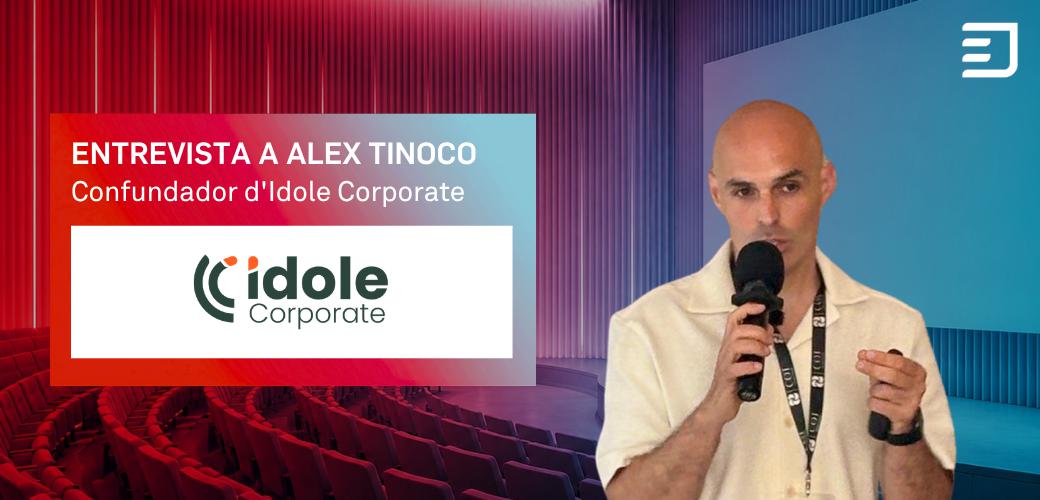
Corporate wellness is no longer just a complementary benefit; it is becoming a strategic element for companies. Physical and mental health, team cohesion and burnout prevention are increasingly decisive factors for talent, culture and performance.
In this context, corporate wellness is moving towards more comprehensive and personalised models, where physical activity, technology and health professionals play a key role. We speak with Alex Tinoco, Co-founder of Idole Corporate, to explore this evolution and the opportunities the sports industry offers to transform health and wellbeing within organisations.
A few years ago, corporate wellness was seen as a complementary benefit. Today, what role should it play in any company’s strategy?
It should be a pillar of business performance and sustainability, not an accessory. In the past, companies would put in a ping-pong table or give employees fruit and consider the job done. That is just window dressing. Today, wellbeing needs to be structured around three non-negotiable pillars: physical health, mental health and team cohesion. If a company does not address these three areas in an integrated way, its talent model is not sustainable. Furthermore, if companies take advantage of subsidised training and integrate it with mandatory compliance training, wellbeing stops being an expense and becomes a financially intelligent asset.
What real impact have you observed that health and wellbeing programmes have on indicators such as productivity, talent retention or corporate culture?
The impact goes straight to the bottom line: it reduces talent loss, increases the sense of belonging and reduces presenteeism, which is when people are physically at work but mentally exhausted. When you work on team cohesion through purposeful team building activities and take care of mental health, culture stops being a theoretical PDF and becomes a real sense of belonging. From a practical perspective, when companies discover that they can structure part of these programmes through subsidised training, the impact is not only human but also delivers an immediate return on investment (ROI). That is why, through our academy, we are promoting a university postgraduate programme: the sector needs doctors, psychologists and trainers who know how to package services, sell value and manage subsidised training procedures so they can speak to management and HR on equal terms.
How do you think the corporate wellness sector will evolve over the next five years? What trends will make the difference?
We are moving towards hyper-personalisation and away from a "one-size-fits-all" approach. The major mistake of the last decade has been offering the same yoga class to a 55-year-old manager and a 24-year-old developer. Two factors will make the difference: preventive mental health and adaptability. Corporate wellness will not be about "doing more", but about integrating health into work routines — biorhythms, sleep management and cognitive load — through a clear, structured strategy tailored to each organisation. The future is predictive health, not reactive health.
Physical activity remains one of the most powerful tools for promoting health. How can it be effectively integrated into companies’ day-to-day operations, beyond one-off initiatives?
It needs to be integrated into daily routines and continuous training, rather than being treated as an isolated marathon once a year. Physical activity should be linked to team cohesion and risk prevention. When you connect improvements in physical health with healthy-habit programmes that also meet the company’s training or regulatory requirements, health suddenly stops being seen as "time wasted" and becomes effective, high-value working time.
Technology is transforming the way we look after our health. What role will artificial intelligence, data and digital platforms play in corporate wellness programmes?
They will be tools for measuring impact and optimising processes, but they will never replace people. Technology allows us to analyse stress and workplace climate data so that we can act before burnout occurs, and it facilitates the administrative management of subsidised training. However, mental health and team cohesion require human empathy, real-world dynamics and well-trained professionals. Technology should be the invisible support that makes a programme more efficient, not a "screen" that distances teams even further. That said, technology must be a means, not an end. If we fill employees’ lives with apps they do not use, we create more digital stress. Technology should give us the right data and enable the right action.
What opportunities do you see for companies in the sports industry to create greater value in the corporate world through solutions related to health, physical activity and wellbeing?
The great opportunity for the sports industry is to stop selling "machine or trainer minutes" and start selling comprehensive health solutions for corporations. Sports companies have the experience, rigour and know-how of high-performance sport. If we can adapt the methodologies used with elite athletes to the lives of executives or sales teams — energy management, rest and nutrition — we can become an indispensable partner for the business community. The great opportunity is to stop selling "trainer hours" and start selling comprehensive corporate health solutions.
The sports sector has the methodology, but it often lacks the language of business. If we train ourselves to package services, understand mental health, apply consultative sales techniques and master funding channels such as subsidised training, the sports industry can become the strategic partner every major company needs to look after its most valuable asset: its people.
What are the main challenges you face over the coming years?
We face two major challenges. First, helping companies understand that physical health, mental health, team cohesion and mandatory training should not be treated as separate areas, but can be integrated into a strategic and subsidised wellbeing plan. Second, through our postgraduate academy, continuing to professionalise health specialists so that they have all the business and management tools they need to transform the business community from within.
What do you think being part of a cluster such as INDESCAT can bring you?
INDESCAT is the best bridge between the sports industry and the corporate world. It gives us synergies, visibility and the ability to influence and recommend. As an organisation that both provides direct services to companies and develops new professionals through our university academy, being part of INDESCAT allows us to connect with key stakeholders, validate our vision of comprehensive wellbeing and lead the paradigm shift in occupational health in Catalonia.
_20260618114449.png "logo indescat")


_20231003113532.png)